
THE PATH CHOSEN | Photography of Charlie Carter
Few art methods have changed as dramatically as photography. Shaped by innovation and technology, the process of making photographs has undergone a revolution since its invention 125 years ago. Fine art black and white silver gelatin printing is a fading art. It requires a highly skilled and experienced darkroom technician. A devoted band of film fans still adhere to the traditional method of gelatin silver printing. Meet artist and photographer Charlie Carter.
Clinging to the traditional means of the gelatin silver process, photographers like Charlie continue the practice through the use of film and silver coated papers. “I am inspired and influenced by technique. My interest in the past is becoming more prominent in my work today,” says Charlie. His compositions are a contrasting mix of 19th century bookplates images combined in the darkroom with his contemporary landscapes. It is in the darkroom manipulation where science becomes art. The selection of the appropriate negative and the preparation for the selected negative in the enlarger is a long procedure. The laborious process of printing these numerous ideas into a single photograph is complex and very time consuming. It’s not uncommon for Charlie to produce several images before creating the one that fits the highest standard.
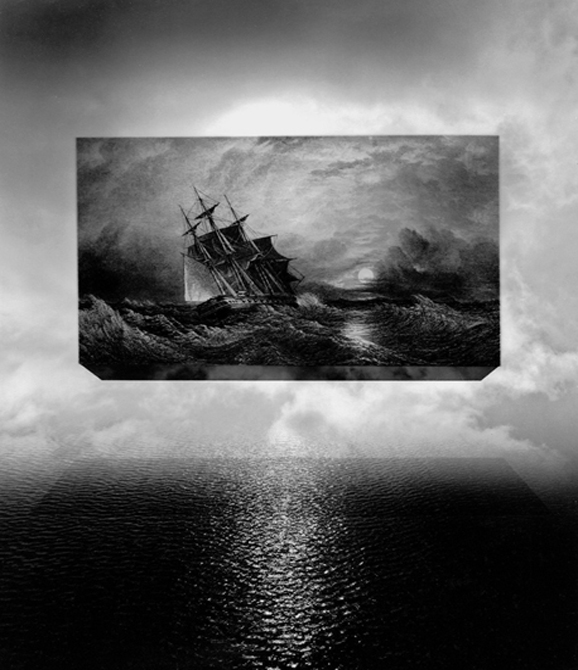
Silver Gelatin Fine Art Photograph
“Each photograph is unique due to how it is printed and the paper it is printed on. The complexity and spontaneity that occurs in the printing of my photographs ensures its originality to the collector”. Charlie Carter
Carrying photography equipment into Idaho’s backcountry you come to understand where Charlie Carter’s passion lies. Being a native Idahoan, his pursuit of the perfect black and white photograph has led him all over the west in hopes of capturing the majesty and grandness of the Western landscape. His strives to create images that inspire and emotionally move the viewer into looking at the natural world around them. Creating an appreciation for the art of silver gelatin black and white photography is a bonus. “My goal is to produce imagery that evokes appreciation to technique, creative merit and intellectual thought while upholding the traditional process of fine art photography.”
Charlie received a BFA degree from Boise State University while studying under Professor Howard Huff. He has worked in his chosen medium for the past 20 plus years and is steadfast in making his photographs the “old fashion way”. Charlie resides in Meridian, Idaho.
Charlie Carter’s exhibit, The Path Chosen opens Friday October 4, 2013 and continues through early November at the Gallery at Finer Frames.
IN THE RIGHT LIGHT | Rules for Lighting Artwork
Picture frame lighting adds high style to a room by illuminating artwork and turns artwork into a dramatic point of focus. Lighting is critical when paired with fine art and even a slight difference in direction or type like fluorescent, incandescent, halogen, natural, etc. can make all the difference. Like anything else, art lighting is a compromise and requires a little expert advice.
Types of Light | Art looks great in natural sunlight but most art will deteriorate in this light. Fluorescent lights are not recommended for art in most cases since they give off a high amount of damaging UV rays. Incandescent bulbs are great for warm colored paintings but not recommended for paintings with cool colors. Halogen bulbs are not completely safe since they emit some harmful UV rays and in many cases heat. It is not advisable to use these types of bulbs for fine art. New LED lights are the best option. LED bulbs emit zero heat and no U.V. making it the best option for illuminating fine art. L.E.D.’s are Earth friendly too by providing a long bulb life with a very low power usage.
Wiring for Lights | The best solution is to professionally direct wire to a recessed box behind the painting. But, if you don’t mind seeing the cord, lights can also be plugged into the outlet with ease. Remote control and battery powered lights are another option when a power source isn’t easily available. However, they are far from perfect and come with larger transformers and shorter battery life.
Choosing the right size | When shopping for a picture light, consider that the ideal light should measure two-thirds the width of the frame. Traditional shades and contemporary fixtures are available in sizes ranging from 4” to 4’ or more at prices ranging from $20 to several hundred.
Light positioning | How a light is positioned affects how artwork is highlighted. Place the light at a 30-degree angle to the work of art to minimize glare.
Avoid Heat Damage | Take special care when using hot halogen lights. Place lights far enough away to avoid damage from heat that can crack oil paintings. To test the heat from your lights, put your hand between the art and the light source. If you can feel heat from the light, it could damage a textile or oil painting.
For more advice on showcasing your artwork or information on purchasing lighting fixtures contact Meg at 208-888-9898.
New in the Gallery
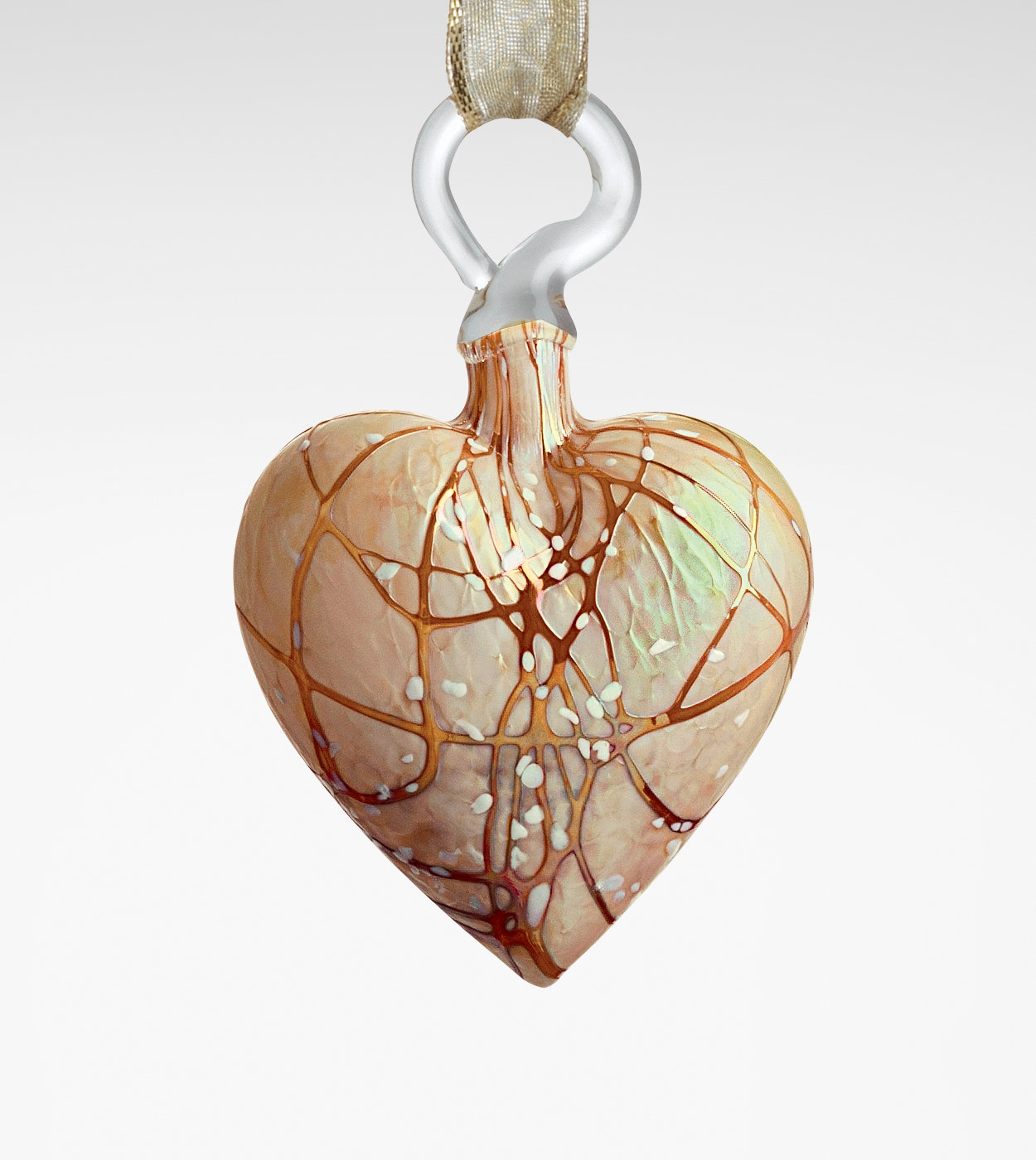
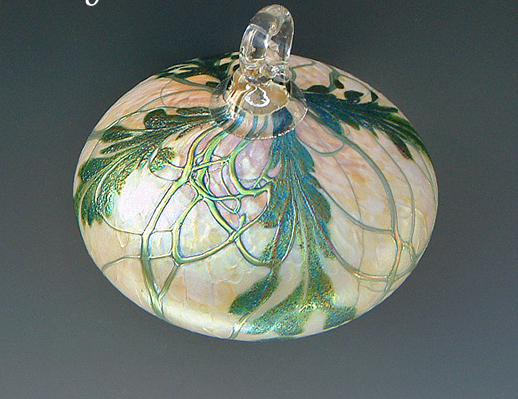
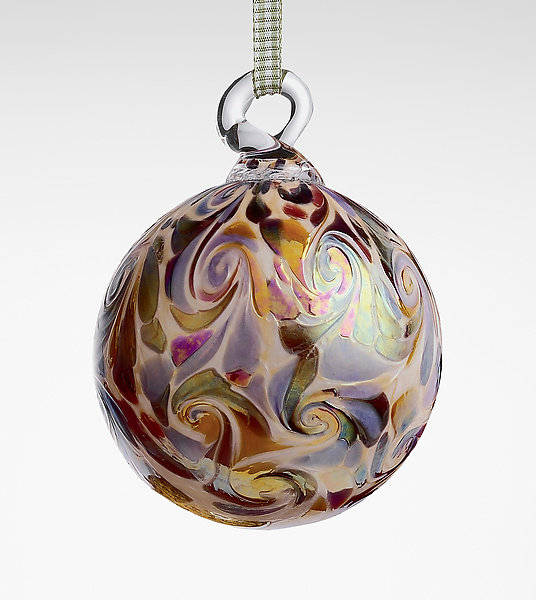
In the middle of our road trip along the Pacific Coast, we stumbled across Bryce Dimitruk. His gallery Vine Art Glass is on highway 101, a few miles south of Bandon, Oregon. His blown glass ornaments demonstrate a mastery of skill; blending molten glass with color, pattern and textures to achieve a deliciously wonderful combination. I couldn’t leave without one… so I bought a dozen more and am delighted to offer them in the gallery.
HANG UPS | Everything you need to know about hanging art in your home
A home is a place that should comfort you, filled with precious things you’ve collected and memories you’ve made with people you love. That’s why artwork is such an important part of what makes a house into a home. When you’re displaying art in your home make sure you keep these tips in mind to keep your home picture perfect.
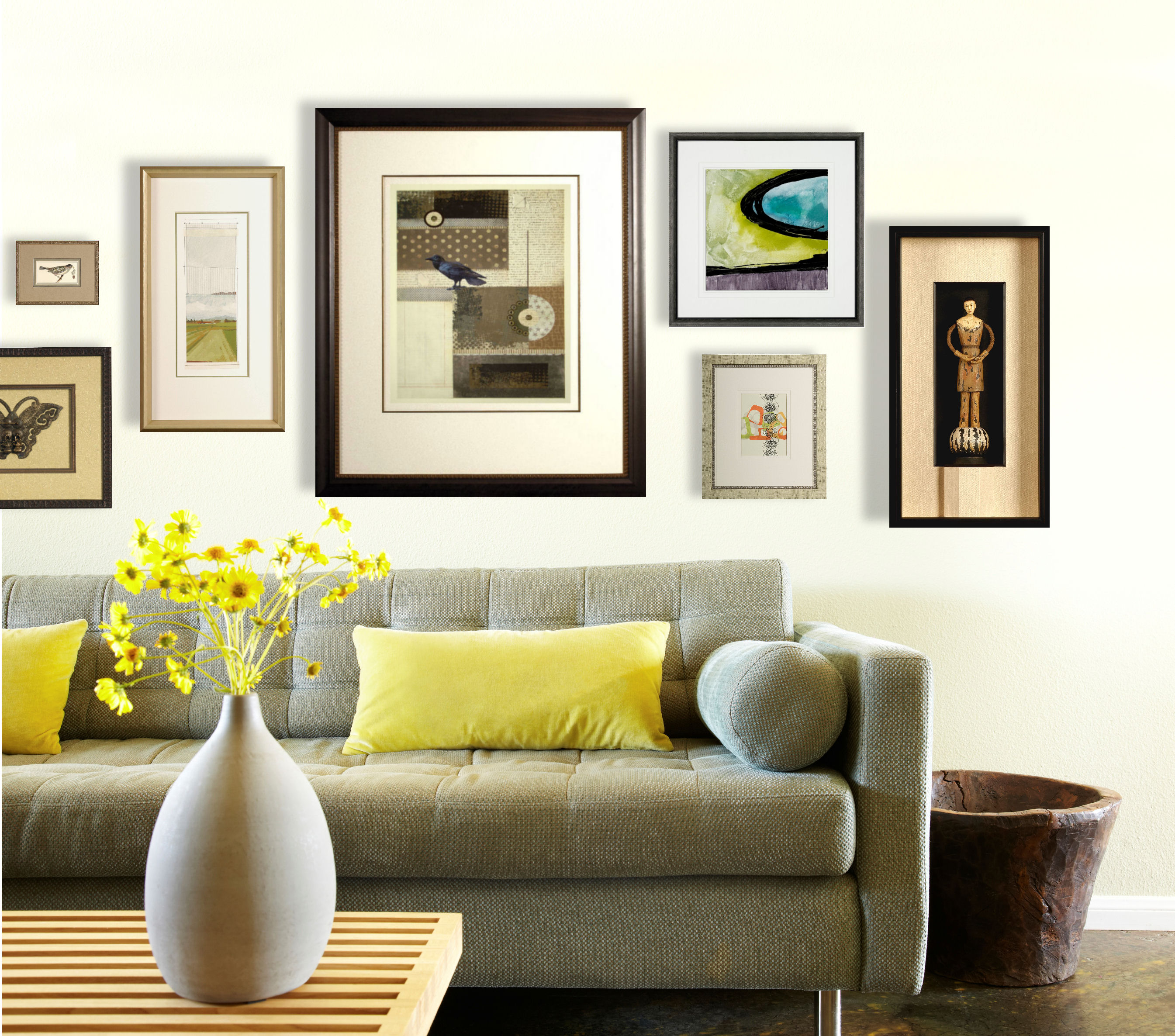
Group collections together for maximum impact
Keep it Together | It’s important to display collections together for maximum impact. Etchings, photographs, maps and the like are perfect arranged together. Group similar items by theme or pattern to create a dramatic focal point like a polished pro. Different sized and odd number items can have similar frames for an informal arrangement but same sized pictures in the same collection should have identical frames for a more structured, modern look.
Hang Ups | There are rules professional decorates following for showing artwork to its best advantage. Artwork looks its best hung 60” – 62” from the floor to the center of the picture. In rooms where the art is viewed sitting down, like the dining room, I install closer to the 60” to center mark. In hallways for example, a higher 62” is closer to eye-level. And for over a mantle, 7” is the perfect height. This rule applies to over the sofa as well.
Get Creative | If original art isn’t in your budget, consider framing a cut piece of beautiful fabric or wall covering. There are many interesting alternatives to traditional wall decoration. But I would caution you to avoid the temptation to hang photos on clothes pins, as is popular on sites like Pinterest. That can cause damage to the picture and there’s no glass protecting it from sunlight or other environmental hazards. The web is filled with creative ideas. Just remember to use caution with any original photographs.
As always, our experts stand ready to assist you with hammer and nail, or just friendly advice. Call us at 208-888-9898
Learn to Paint with Watercolors Class
Join national award-winning painter Joyce Green for a fun and informative workshop to learn techniques for painting with watercolors. You’ll enjoy her playful spirit while learning her secrets for planning a strong composition and mixing and applying color. $35 includes lesson and materials. Only 6 spots are available, so call 888-9898 to reserve your spot!
Wednesday, April 17, 2013
6:30pm – 8:30pm
164 E State Street | Suite B | Eagle, Idaho 83616