
We created this shadowbox cabinet for a gorgeous wedding gown as a 20th-anniversary gift from a husband to his wife. I think it may be my favorite project of all time—but it didn’t start out that way.
When he first walked in and asked if I could frame his wife’s gown as a surprise, my stomach tightened a bit. A full wedding dress is a project you don’t take lightly. The sheer size, weight, and depth requirements alone made this a puzzle. Taffeta can be heavy, lace can be fragile, and mounting a dress so it looks graceful—not stiff or collapsed—requires planning and a lot of trial and error.
Customers often assume I know immediately how an item should be framed. But in this case, I needed days just to think through the structure, materials, and design. And the emotional stakes were high. His wife had planned to frame her gown for 20 years. Twenty years is a long time to anticipate something—and a lot of pressure to get it right. I knew my goal wasn’t simply to build a shadowbox. It was to exceed her expectations and give her a piece that would move her to tears in the best way.
At our first consultation, the husband wanted guidance on how to choose the frame style and colors without his wife’s input. It was a lovely idea for a surprise, but I couldn’t stop thinking about all the ways a design like this could miss the target if the bride wasn’t part of the conversation. Framing, especially something sentimental, has to reflect the owner’s style and the environment where it will ultimately live. There is no single “correct” way to frame anything—taste is subjective, and the best results come from collaboration.
Thankfully, the husband agreed, and we invited the bride in.
The gown was breathtaking: a champagne Pronovias Barcelona dress with soft taffeta and delicate ivory lace. It deserved a dramatic, clean presentation, and a dark background made the details stand out beautifully. The client chose Crescent’s Nightshade linen mat for the background and the side walls—classic, simple, and rich.
The frame was chosen from a new Larson-Juhl sample box that had just arrived. They were thrilled to be the first clients to use a moulding from the Museo collection. The largest profile, finished in a soft black with fine detailing, paired perfectly with the lace—subtle but elegant.
Design sorted… now came the engineering.
To support the dress, I needed a mannequin. A friend who owns a dress shop loaned me a form made from dense plastic. It provided excellent support, but the neckline was high and unattractive. If left as-is, it would distract from the gown. I needed the structure without the visual bulk.
Nothing in the shop could cut through the thick plastic cleanly, so another friend stepped in and trimmed and smoothed the neckline. Once altered, I drilled small holes around the edges so I could sew the gown directly to the form. This step was tedious but essential—the dress needed to be shaped and lifted naturally, not simply pinned.
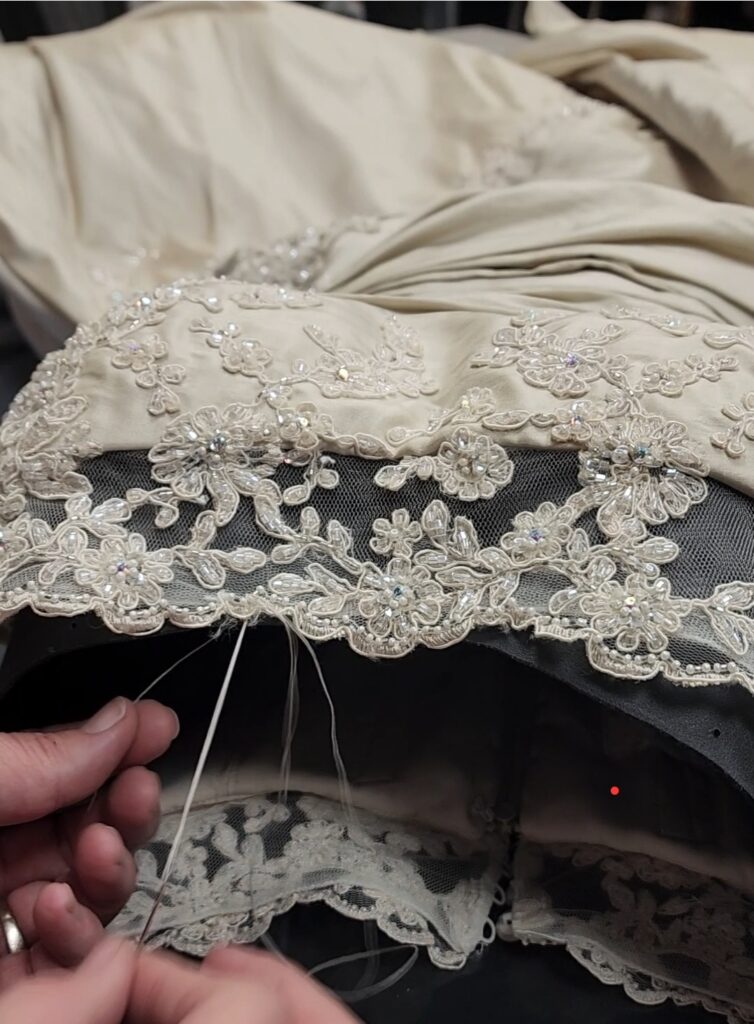
The mannequin, however, created a new challenge: its depth added a full seven inches, which meant a standard shadowbox frame wouldn’t work. I now needed to build something closer to a cabinet.
Using lumber would have left me with finishing problems—matching stain colors, dealing with exposed edges—so I chose black wood shelving boards instead. They were already finished, perfectly sized at 8 inches wide, and could be delivered straight to the shop along with a 48″ x 72″ hardboard sheet for the backing.
For the internal structure, strainer bars became the backbone. I attached a large strainer directly to the back of the frame, creating a solid interior framework to support the long sidewalls. I cut additional strainer pieces as cross-supports, ensuring the cabinet stayed square and strong. Using a nail gun, I secured twenty vertical pieces to connect the sidewalls to the inner strainer frame. Once assembled, it was clear: this wasn’t a shadowbox—it was a furniture-grade cabinet.
The final exterior size measured 55″ wide × 67″ tall × 9″ deep.
For glazing, the choice was easy: Tru Vue Optium Museum Acrylic. With something this large, you want clarity, light weight, and safety. OMA checks every box.
Throughout the mounting process, I kept the clients updated with progress photos. Showing them the steps—how the dress was sewn to the form, how the skirt was arranged against the glazing—helped them feel included and reassured. For a project with this much emotional weight, transparency was far better than a big reveal. Surprises are fun, but not when expectations are decades in the making.
The first time the bride saw the finished piece in person was the day we delivered and installed it in her home. I hired a professional installer to help hang the cabinet safely in her closet, where it would live as both art and memory.
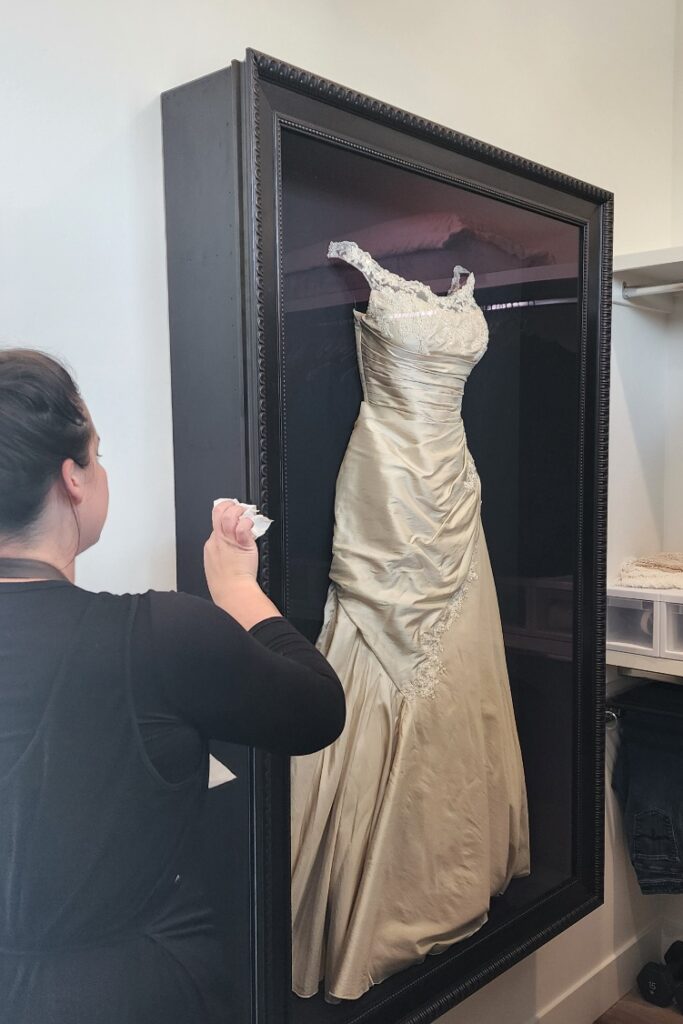
When we lifted the cover and she saw it fully assembled—mounted, lit by natural light, framed in black linen and Museo moulding—her reaction made every challenge worthwhile. She absolutely loved it.
Creating this piece reminded me how meaningful our work can be. Yes, framing is technical. It involves math, engineering, materials knowledge, and problem-solving. But at its core, it’s about honoring moments that matter.
This gown wasn’t just a dress. It was a story—20 years of marriage, memories, and milestones wrapped into a single garment. Being trusted to preserve something so important is a privilege I never take lightly.
Seeing the finished shadowbox installed, knowing I had exceeded their expectations, and witnessing the bride’s reaction… that’s why I do what I do.
And honestly? I still think it may be my favorite frame of all time.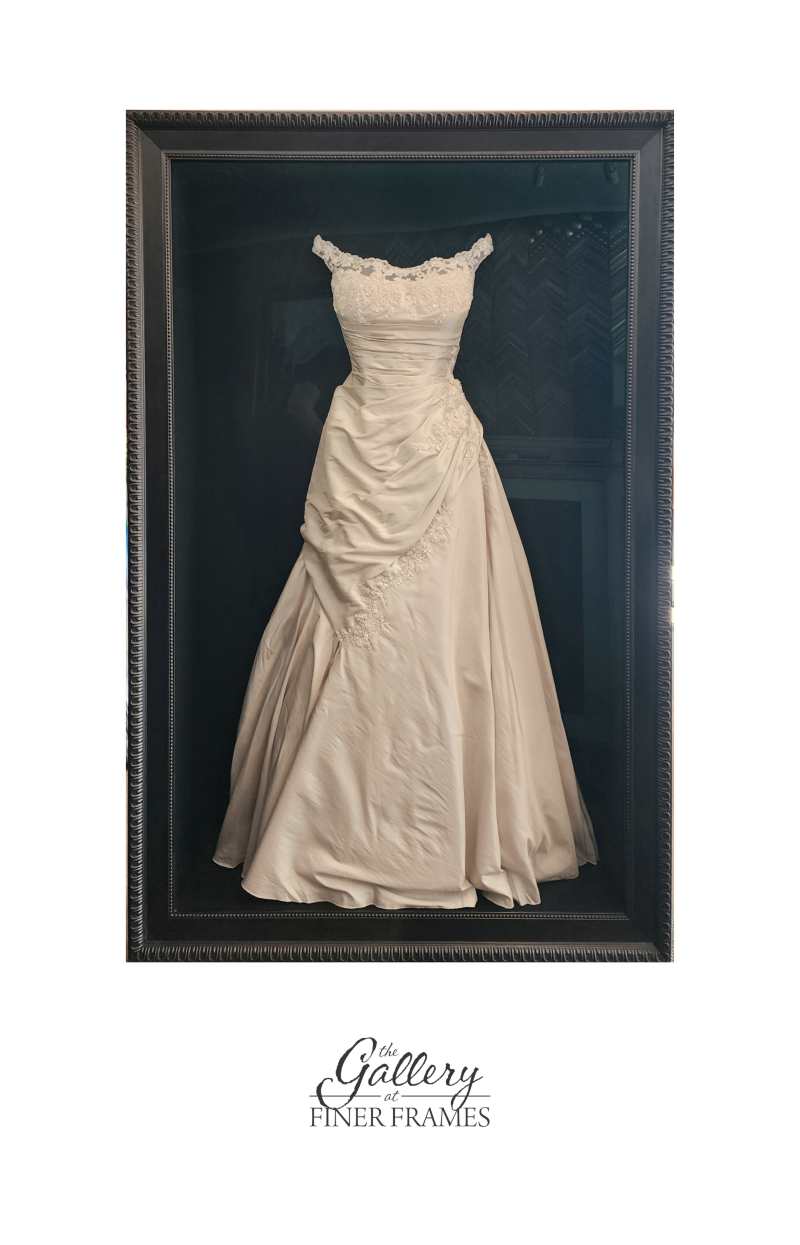


Leave A Comment
You must be logged in to post a comment.